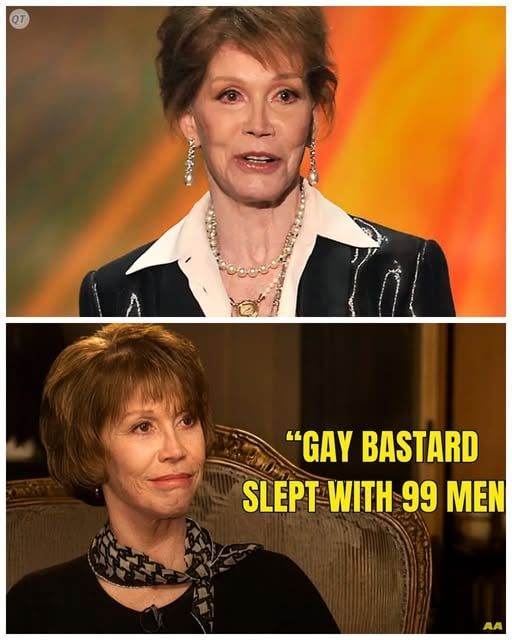
In the golden glow of classic television
Mary Tyler Moore’s magic was never just in the characters she played;
it was in the woman who chose how to play them.
In an industry built on noise, she practiced a different kind of influence—measured,
thoughtful, and deeply human. She understood that every choice,
every line reading, every moment of restraint could either reinforce a
stereotype or quietly expand what audiences believed a woman could be.
Her legacy endures not because she shouted the loudest,
but because she stood the steadiest.
She modeled a version of success that did not demand self-betrayal:
a career built on professionalism, emotional intelligence, and unwavering authenticity.
Younger performers saw in her not just a star, but a blueprint—
proof that you could be ambitious without cruelty, visible without becoming a spectacle,
powerful without abandoning grace. Long after the studio lights faded,
what remains is the quiet courage of a woman who
changed television simply by insisting on being fully, honestly herself.