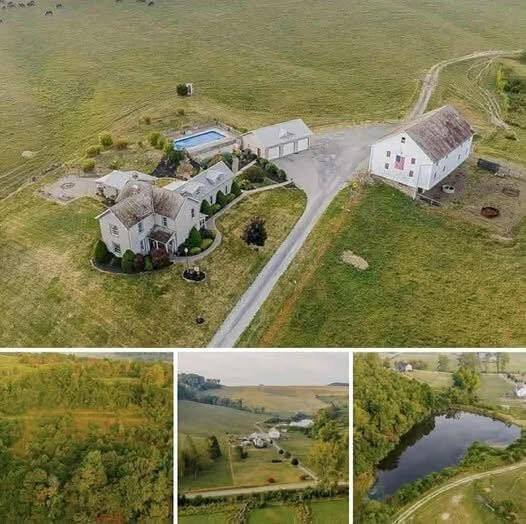
Ninety-five acres priced at ju
At first glance, the Missouri property listing feels almost unreal: ninety-five acres, a three-bedroom,
two-bathroom house, nearly 2,700 square feet, and a price tag of just $135,000.
In today’s housing market, dominated by bidding wars and skyrocketing prices, such numbers seem fictional.
Online, the listing sparked disbelief, curiosity, and speculation—was the home uninhabitable, legally complicated, or haunted?
Yet the reality is simpler: in parts of rural America, land is abundant, demand is modest, and value is measured differently.
Across urban markets, buyers face prices far beyond local wages, competing for small apartments or starter homes.
By contrast, rural areas like this part of Missouri operate on different dynamics: population growth is slow, development is limited, and land supply remains plentiful.
Here, affordability exists because geography shapes value, not speculation.
The property lies beyond Hannibal, Missouri, a town known for its literary history rather than economic expansion.
Growth has been modest, industries stable, and life intentionally slow.
Surrounding farmland is largely family-owned and passed down through generations.
Land is valued for use and stewardship, not flipping or dense development.
For buyers seeking quiet, autonomy, and connection to the land, these traits are advantages.
A long gravel drive leads through open fields, offering separation, privacy, and silence.
The house is functional, grounded, and built for daily life rather than resale or aesthetics.
Nighttime darkness, distance from neighbors, and open space provide forms of wealth rare in urban areas: control over environment, time, and lifestyle.
The land itself amplifies possibilities. Pastureland, wooded areas, a pond, and scattered outbuildings create opportunities for farming, conservation, recreation, or expansion.
Ownership here means freedom to experiment, live self-sufficiently, and shape the environment over time.