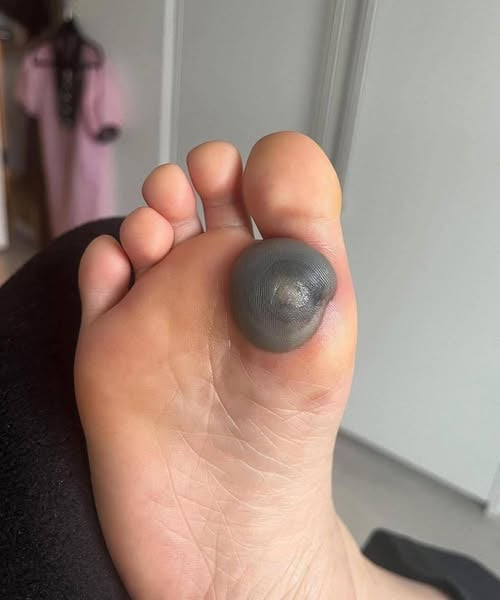
My daughter woke up with this huge
Blood blisters strike without warning.
One moment your skin looks normal, the next there’s a dark, swollen bubble that looks frighteningly serious.
Panic rises. Is it dangerous? Is it cancer? Should you pop it, drain it, or rush to the ER?
That ominous dark bubble is usually your body’s quick, efficient response to sudden trauma.
When small blood vessels under the skin rupture from pressure or friction, blood leaks out but gets trapped beneath an intact top layer of skin.
The result is a tender, maroon or purplish blister that often appears on fingers, palms, toes, feet, or even inside the mouth after a bite or dental work.
Though its appearance can be unsettling, a blood blister is typically a minor injury that heals on its own within one to two weeks.
The safest approach is to leave it intact, protect it from further rubbing, and ease discomfort with a cold compress.
If it breaks, gentle washing, antiseptic, and a clean bandage help prevent infection.
Medical advice becomes important when pain is severe, healing is delayed, infection is suspected, or underlying conditions like diabetes or circulation problems raise the stakes.