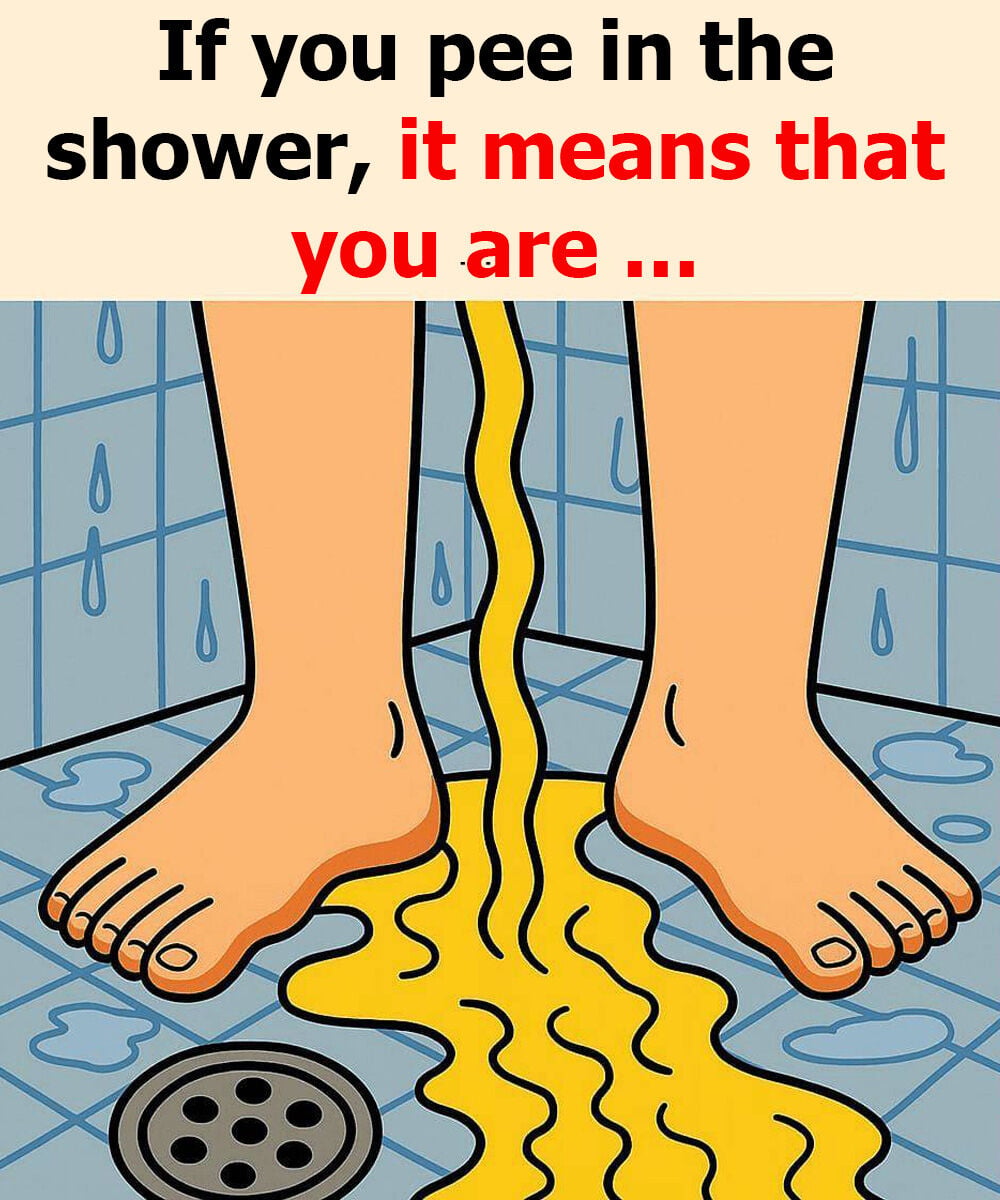
Peeing in the Shower: What You Shoul
Some people confess it.
Most people lie.
And almost no one wants to be judged for it.
Your shower habits—how long you stay, what you think about,
even whether you pee—may be quietly exposing who you really are when no one’s watching.
Psychologists say these tiny rituals reveal control, desire, stress, even hidden shame.
Behind the closed bathroom door, your most ordinary routines become a quiet psychological mirror.
Those who pee in the shower tend to be blunt realists:
practical, efficiency-driven, and unbothered by rules that feel purely symbolic.
They often defend their choice with logic—saving time,
saving water—yet many still hide it, revealing how powerful social judgment remains, even over private choices.
In contrast, people who refuse the habit usually draw sharp lines between “clean” and “unclean,” valuing structure, ritual, and clear personal boundaries.
Others turn the shower into a stage or a sanctuary.
Singers often radiate playful confidence, using those few minutes as a burst of self-expression.
Long-bath lovers seek comfort and emotional calm, choosing slow restoration over speed.
Quick-shower people chase connection and purpose outside the bathroom,
while daydreamers and mental list-makers expose restless, creative, constantly planning minds that rarely, if ever, fully switch off.