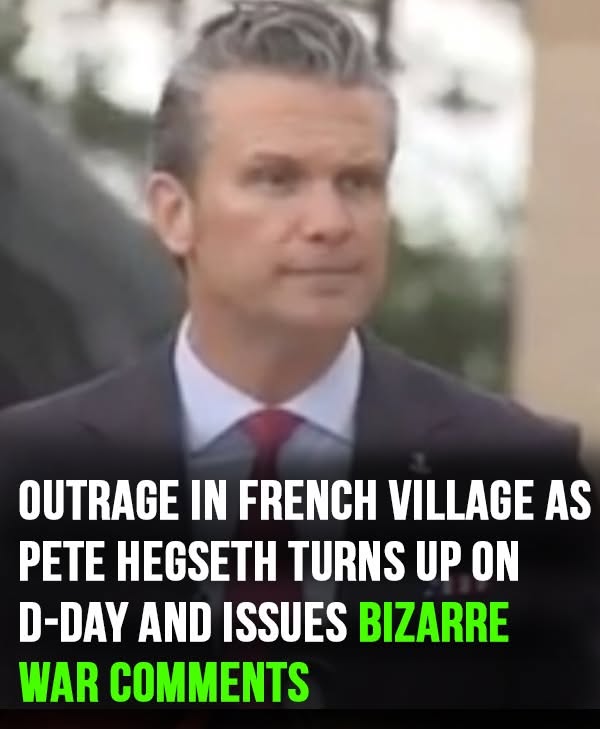
French residents furious after Pete Hegseth’s
In Langrune-sur-Mer, villagers had prepared to honor the young men who died on their sands,
not to host a speech they felt weaponized that sacrifice. Civic leaders, already uneasy with Hegseth’s
past remarks, watched in disbelief as he compared wartime invasions to modern migration,
framing desperate crossings as a new ideological storm battering Europe’s shores.
For many, it felt like their dead were being drafted into a different war they never chose.
The backlash was immediate and raw. Residents spoke of betrayal,
of democracy reduced to a talking point, of institutions built after 1945 casually dismissed.
Extra security agents ringed Hegseth’s family as the mood soured,
a jarring contrast to the quiet crosses stretching toward the sea.
In the end, the visit exposed a painful rift: between memory as sacred duty,
and memory as ammunition in today’s battles over borders, identity, and who gets to speak for the fallen.