Green Meat in Chicken? Here’s What’s Really G
You slice into your perfect roast chicken… and the meat is green.
Your stomach drops. Your brain screams “poison,” but your hunger whispers, “maybe it’s fine.”
That ugly color feels like a warning from nature itself. Yet sometimes, it isn’t rot at all. It might be a bruise, a dead muscle, or just a trick of light.
Other times, it’s a full-blown bacterial horror show waiting to explode in your gut. Knowing which is which can mean the difference between a good meal and a night in the ER.
Before you throw it out—or worse, serve it—there’s one simple test that decides everything.
Green patches in chicken can come from several causes, and not all of them are dangerous.
Bruising from rough handling or flapping can leave blood trapped deep in the muscle, turning from purple to a dull greenish hue as it breaks down, much like an old bruise on your own skin.
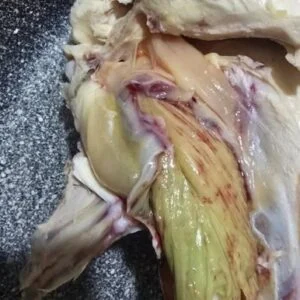
Green muscle disease, common in heavy broiler chickens and turkeys, happens when the inner breast muscle is starved of oxygen and dies.
The outside can look perfect, while the tenderloin inside is an off-putting greenish-brown, spongy and unappealing, but not necessarily unsafe if the bird was properly handled and cooked.
The true danger is spoilage. If the green area comes with a sour or sulfur smell, sliminess, or mushy texture, the meat is decomposing and must be discarded, no matter how much it cost.
Light reflections or packaging can sometimes create harmless greenish or rainbow sheens, especially on vacuum-packed meats. When in doubt, trust your senses: if there is any odd odor at all, walk it straight to the trash.