SPAM: What does it stand for, and what are
Long before it became a punchline, SPAM was a lifeline. Launched by Hormel in 1937,
it answered a desperate need: cheap, shelf-stable protein when fresh meat was a luxury.
During World War II, millions of cans followed soldiers across Europe and the Pacific,
feeding troops and civilians alike. For many, that salty pink block meant the difference
between going hungry and getting through another day.
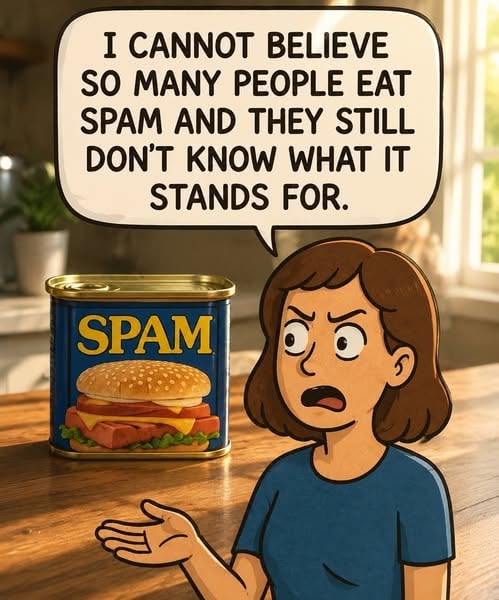
Its name, however, remains its most enduring mystery. Theories swirl: Specially Processed American Meat,
Shoulder of Pork and Ham, Salt Preserves Any Meat. The most accepted story credits Ken Daigneau,
who allegedly coined “SPAM” as a snappy blend of “spiced ham” and won $100 for it. Inside the can,
though, there’s no dark secret—just pork, water, salt, potato starch, sugar, and sodium nitrate, ground, mixed, sealed, cooked,
and cooled into a food that somehow became both a comfort and a cultural legend.